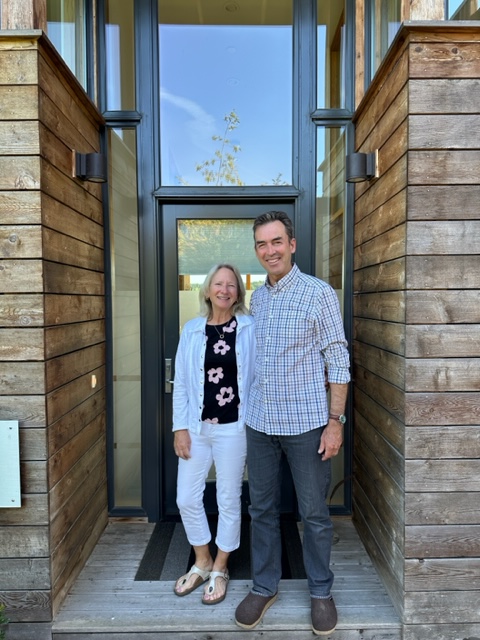
My wife and I raised our kids in a single-level ranch home in the East Bay of CA and spent many years trying to make it more efficient and green, including adding solar panels in 2007, and converting to 100% electric yard tools. But since the home was built in the early 50’s it had a large gas furnace with old leaky ducting, conventional gas hot water heaters, poor insulation, etc. and overall a challenge to convert into a net-zero home. Although I’m sure we could have figured it out with enough time and effort.
But, a “short cut” presented itself. We discovered a new net-zero community on Bainbridge Island, WA in 2016 that was designed around a framework called One Planet Living, based on 10 sustainability principles. We couldn’t resist moving there and immediately having all the features we had wished for – all electric, ultra-tight envelope, solar system, heat pump for heating/cooling, hybrid hot water heater, car charging, induction cooking, bamboo flooring and a strong focus on community. Since it was architected as a net-zero home even the roof angle was designed to maximize solar collection. It was a home of the future! All we had to do was move in!
One simple way that we can tell that it’s a net-zero home is that my wife has memorized our monthly utility bill – $7.97, which is the cost of just having an account and being connected to the grid. Basically, our solar system more than covers our electricity use, including charging our car. So, driving our electric car is emission free and cost free! No charge to drive unless we road trip.
But we don’t like to be dependent on a car anyway, so we live in town and subscribe to the “15-minute city” concept where most daily necessities and services are within 15 minutes via walking, biking, or public transportation. That idea gained traction after being advocated by former Paris mayor Anne Hidalgo and now adopted as a goal by a number of cities around the world. This approach aims to reduce car dependency, promote healthy and sustainable living, and improve wellbeing and quality of life. We love it! Here’s a sample of our walking times:
5 min walk – movie theater, city hall, farmer’s market, performing arts center, and numerous restaurants
10 min walk – grocery store, drug store, physical therapy, eye care, bike shop, barber/salon, and almost everything else!
15 min walk – ferry to Seattle and everything it offers
Due to having so many services nearby we easily get by with one car (which saves a lot of money) and walk most places instead of driving. For us the walking, biking, and public transportation scores that they now show on Zillow.com are exactly what we want to see.
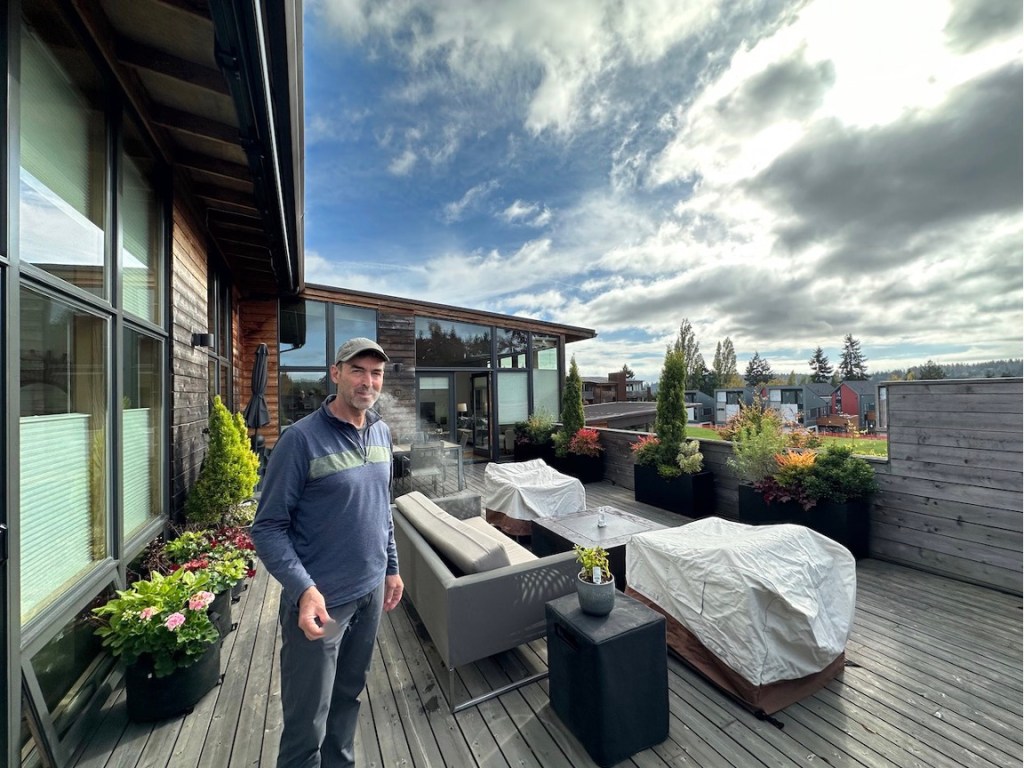
During COVID we discovered that we also needed to still spend time in the San Francisco Bay Area where our youngest son and wife were living, as well as various family including my mother in her 80s, and good friends. So, we decided to buy a second townhouse to use in the winter and spring. Our hope was to create another net-zero townhouse, just like the one on Bainbridge Island. Fortunately, we discovered a community in Marin County built in the 80s, but which was all electric because it was too close to an inlet of the Bay to have natural gas. Perfect. Now all we had to was add net-zero features and appliances over time. We started by installing a ductless heat pump in 2021(replacing radiant heating), then added an induction range and electric fireplace insert in 2022, and now in the process of installing a 5.74kW solar system with battery storage. The heat pump and solar systems have required an architectural review and approval by our HOA board.
For our ductless heat pump system we have three hand held controls for each unit so it’s easy to turn on heating or cooling just in the room(s) where you need it. We typically just turn on the unit in the main living area for maybe an hour in the morning to warm things up, and then turn it off. We barely use the units in the bedrooms.
Since wood fires produce indoor air pollution and greenhouse gases, we bought a Dimplex electric fireplace log set that we can turn on/off with a remote. So easy and so clean!! When we really want to make it seem realistic we play fireplace sounds on a Bluetooth speaker next to it.
Just like on Bainbridge we chose a location that has excellent walkability and bikeability. There are four different grocery stores that we can easily reach by foot or bike, along with a drug store, hardware store, farmer’s market, post office, and numerous restaurants, etc.
One benefit of having a home in Marin County is that it is the birthplace of “Community Choice Energy” (CCE) and the formation of Marin Clean Energy (MCE), which offers clean, renewable electricity to all of its service areas. So, even prior to having solar panels, we were still able to choose 100% renewable electricity, which they call “MCE Deep Green.” Now, the entire Bay Area has Community Choice Energy as an option!
Current Zero Emission Features
Bainbridge Island townhouse:
- All electric. No gas used for anything.
- 9.4 kW solar system, 33 Itek panels (285 watt each, made in WA), Solectria inverter
- Mitsubishi split-system heat pump (ducted)
- LifeBreath – fresh air ventilation system, due to tight envelope
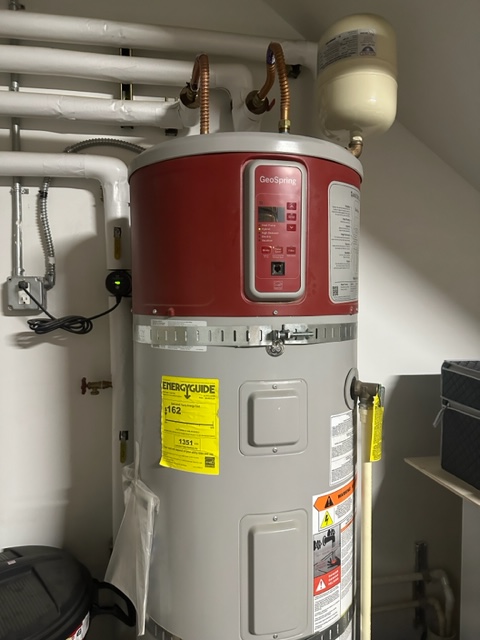
- GE Geospring 69-gallon hybrid electric hot water heater
- Bosch induction range/cooktop
- All LED lighting
- 220 outlet in garage for car charging (we just use an adapter)
Marin County townhouse:
- All electric. No gas used for anything.
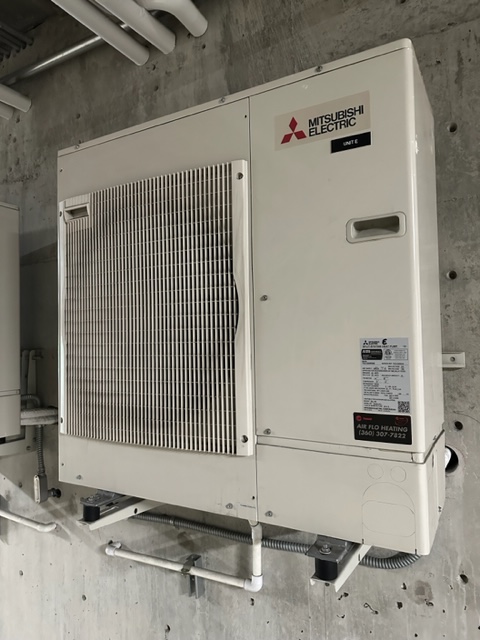
- Ductless heat pump system – Mitsubishi outdoor heat pump (36K BTU) with three mini-splits inside (18K, 9K, and 6K BTUs). Installed in 2021.
- GE Profile 30” Smart Slide-In Induction range/cooktop (installed in 2022)
- Dimplex 25-in Revillusion Electric Fireplace Log Set (installed in 2022)
- JuiceBox car charger in garage
- 5.74 kW solar system (14 REC 410AA Pure panels, 410 watts each) (2024)
- Tesla Powerwall 3 (installed in 2024)
Remaining Goals and Challenges
The only remaining items for our Marin townhouse is to replace our conventional electric hot water heater in the garage with a hybrid (heat-pump) hot water heater, and to replace a number of halogen bulbs with LEDs.
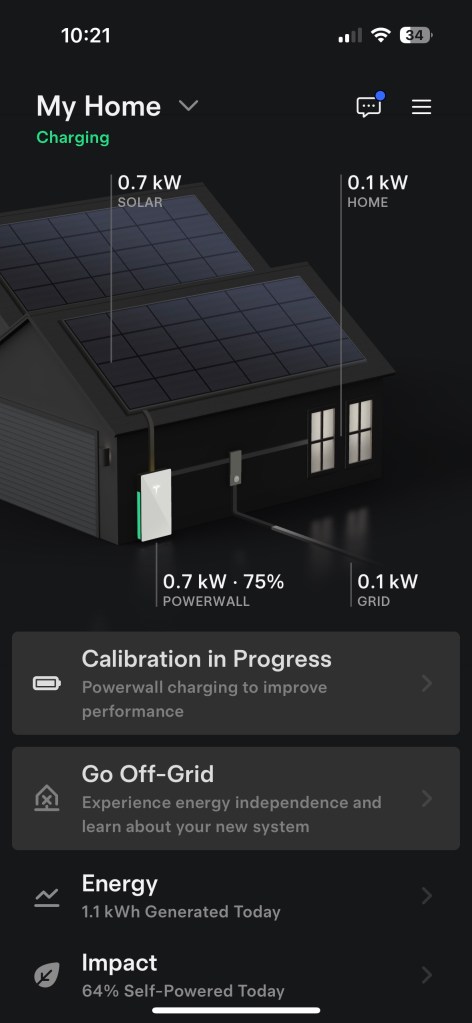
The battery storage is essential because of California’s new net metering, which really reduced the credit you receive for feeding electricity into the grid. So, the payback is better when you can store up excess electricity generated during the day and use it in the evening after the sun goes down. The Tesla app on our iPhone (see image to the right) lets us monitor and control the Powerwall3, which seems to be quite a sophisticated, “smart” device.
Beyond housing, the key items we want to work on are how to best minimize and offset air travel and also how to do even better at choosing food, products, and services that are as emission-free and plastic-free as possible.
Resources
 ZERO30CLUB.ORG
One response to “Two All Electric Zero Emission Townhouses”
Inspirational, with a lot of great ideas! Loved hearing the details and the brands you chose. We’re looking forward to following in your footsteps with a new convection cooktop this summer!
LikeLike