
by James Leach
Introduction/background
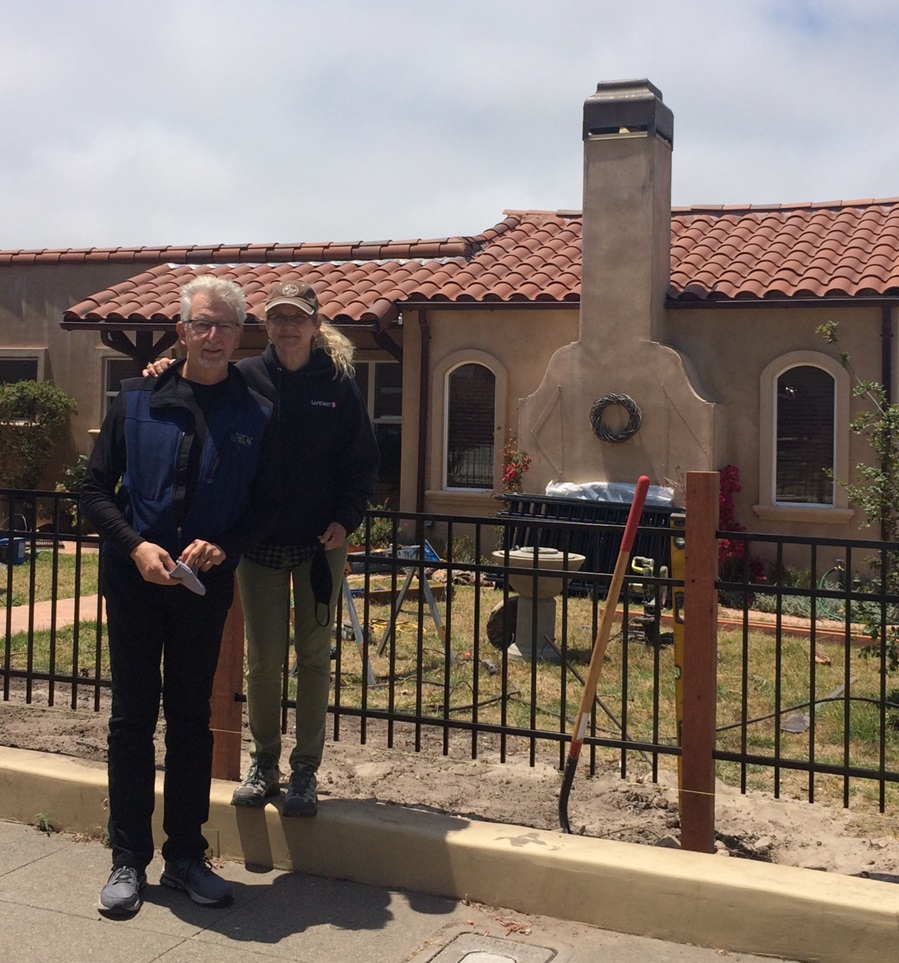
My wife and I moved to the Monterey Peninsula in 2019 and purchased a 100-year-old Spanish revival home that had been renovated in 2008 with modern electrical, plumbing, windows, and insulation. Our goal was to install solar panels and electrify everything to eliminate all of our greenhouse gas and pollution emissions and to significantly cut our energy costs.
First, we did the easy stuff: subscribe to Central Coast Community Energy for 100% clean electricity, install LED lighting, and put in a programmable thermostat. Our second project was to replace the old electric dryer with a single full-size ventless heat pump wash/dry unit that runs on a standard 120-volt circuit. We used the 240-volt circuit previously used by the electric dryer for our level 2 car charger. Next on our list was a new flat roof and 14 panel solar system, plus some upgrades to the main electrical panel to carry more current and circuits, and an additional circuit to the kitchen for an electric induction range. With our gas range, the indoor air quality monitor often showed high levels of air pollution (PM2.5 and NO2). It even notified us of an abnormal CO2 level when we mistakenly left a burner on all day. Replacing the gas range with an induction range solved these problems. The analysis done by our solar vendor showed a full return on investment in just 7 years under California’s Net Metering 2.0 reimbursement pricing for electricity supplied to the grid. Then free electricity after that!
Next it was time to eliminate burning natural gas for space and water heating. After a year of investigating the alternatives, we installed a NEST controlled heat pump HVAC compressor that sits outside (like an AC unit), with an interior variable speed air handler connected to our existing ducts. It is much quieter than our gas furnace was and keeps the house evenly comfortable. To replace our exterior mounted tankless gas water heater, we selected a heat pump hot water heater that could be placed outside near were the old unit was located. Although the space and water heat pump use less than 1/3 the energy of the gas units, we still needed to add seven more solar panels to supply the increased electrical load.
I have done extensive financial analysis, and the bottom line is that over 20 years we will not only eliminate greenhouse gases and air pollution but also save a whopping $82,562!!! Our energy costs just for the house, prior to all the changes, were forecast to be $92,930. Now they are forecast to be just $10,368. And this does not include the money we are saving charging our EVs or from future electricity rate increases.
Current zero emission features:
- 100% renewable electricity from Central Coast Community Energy
- Rooftop solar: 21 panels with Enphase Microinverters producing 11 MWhs per year
- 4.3 MWhs EVs, 3.7 MWhs space and water heating, 3 MWhs all else
- Heat pump HVAC: Bryant system rated COP = 3.2 @ 470F
- Heat pump hot water heater: Sanden SanCO2 w/43 gl. tank, rated COP = 4.2 @ 470F
- Induction Range: LG
- Heat pump clothes washer/dryer: LG
- Electric fireplace log: LegendFlame 23”
- Electric vehicles and charging: Chevy Bolt, Ford Mach-E, Enphase Level 2 charger
- Indoor air quality monitors: uHoo and PurpleAir
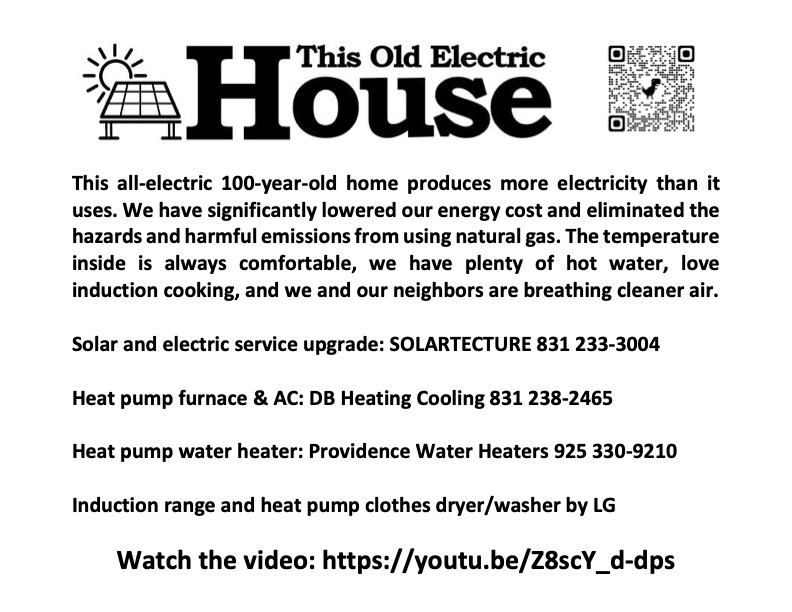
This yard sign has attracted a lot of attention.
Remaining goals and challenges:
Our remaining goals are mostly related to energy storage. We would like to have a backup battery for outages and to avoid higher priced electricity during peak periods. Waiting on vehicle to home (V2H) bidirectional charging technology to be available.
We pay attention to where the products we buy come from and how those we buy from power their operations. We avoid imported products or products shipped long distances when there are local alternatives. We even started buying from Walmart after learning of their corporate commitment to transition to renewable energy. We consume very little animal products and make sure our organic waste goes in the green can rather than to the land fill. We purchase carbon credits through TerraPass for emissions we cannot eliminate.
Resources to share:
I have created a YouTube video that walks through everything that we did, how we crunched the numbers, and explains how all the technologies work.
I also published a book in 2016 called “The Sustainable Way: Straight talk about global warming – what causes it, who denies it, and the common-sense transition to renewable energy”.
 ZERO30CLUB.ORG