

We (Beth & Zdenek) purchased a Mediterranean Colonial style home in Oak Park, Illinois in 1997 (just west of Chicago). We were drawn to the good schools, convenient location, and enough space to accommodate our three boys. Our home was built all the way back in 1936 in the midst of the depression. In those days craftsmanship was a big deal, but energy-efficiency wasn’t. It was common to have boilers and radiators, single pane wood-framed windows, minimal insulation, and knob and tube electrical wiring. Electrical use was limited to lighting and some kitchen appliances.
Of course, much had been done by the time we moved in 1997, but it was far from a modern energy-efficient home. The first thing that caught our attention was the noise from two 3-ton air conditioners. They were super loud! In 2007, after considerable research we decided to switch to a geo-thermal heat pump. Two main reasons: a) they are more efficient than air-to-air heat pumps, and b) air-to-air heat pumps weren’t widely available yet. The big benefit of geo-thermal is that the ground temperature is much more constant than the outside air temperature (with the water temp. coming from the ground staying between 45-55 degrees year-round). But to utilize the ground we needed to bore 16 holes into our yard to a depth of 125 feet!
Zdenek has spent his career as an enterprise software (ERP) consultant and has a passion for technology, efficiency, and saving money. The geo-thermal project helped him realize that our own home offered an opportunity to use those interests and skills. And we knew there were many more “opportunities” to explore.
We were so impressed with the performance of our geo-thermal heat pump, that in 2010, when we expanded our house, we added two more of them. Now we have three heat pumps – one for the basement and first floor, one for the second floor and upstairs, and one for the studio & garage. See specifics below. We are also using the main geothermal system to preheat our hot water to 80F.
As part of our expansion, we also realized that our single-pane lead glass windows from 1936 were not very efficient thermal barriers and switched all of them out for modern dual pane argon gas insulating windows. This made a big difference!
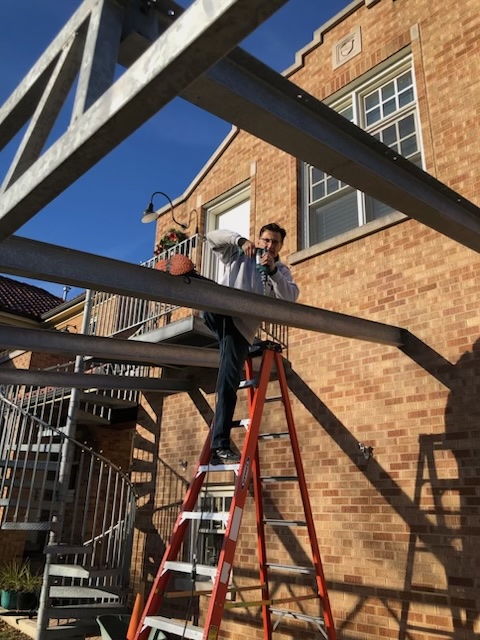
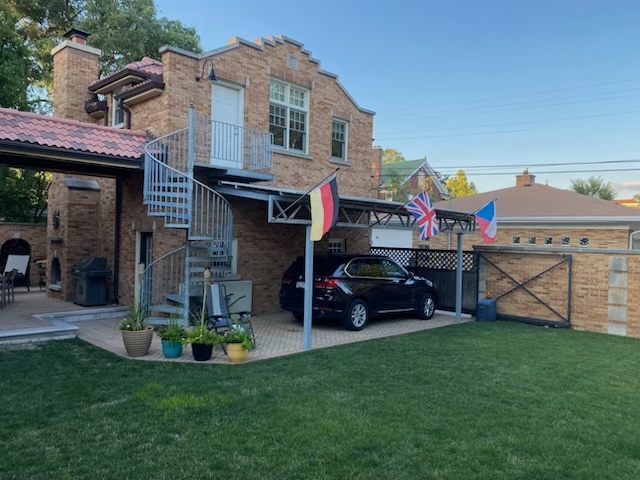
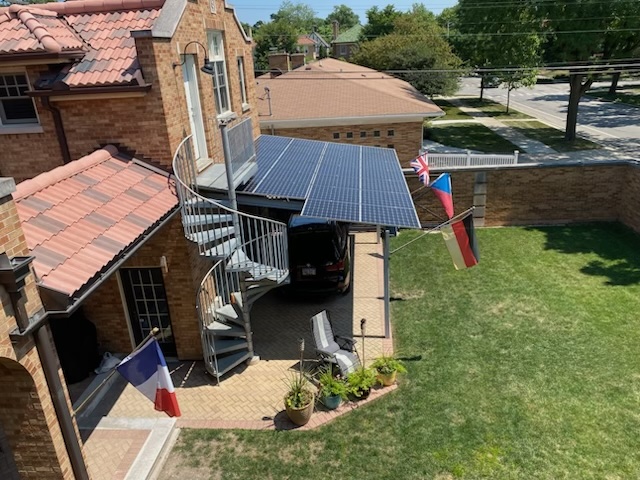
In 2021, our attention shifted to renewable energy and clean transportation. Since we have a clay tile roof that is not conducive to attaching solar panels, we got creative, and designed a carport made with 13 450-watt solar panels (5.85 kW system). We built a steel structure to attach the panels and installed rubber bushings between the panels to make it watertight. And chose “bifacial” panels which can produce up to 10% from stray light reaching the bottom side! The system is producing up to 50% of our electrical needs, depending on the season and weather, etc. The remainder of our grid-supplied electricity comes primarily from nuclear power, which is emissions-free, but has all the pros/cons of nuclear.
Around the same time we purchased an EV, that we charge during the night. We subscribe to real time pricing for electricity, where rates adjust in five minute increments. The rates are typically very low between 1 am – 5 am, sometimes even negative, so we can actually get paid for charging our car! This is because some types of electricity generators prefer not to reduce output for short periods of time when demand is low.
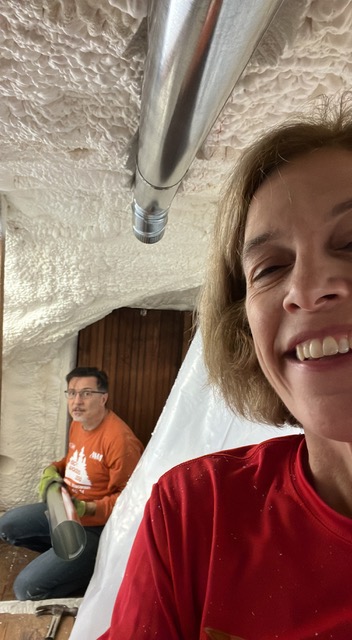
Lastly, in the Fall of 2023, we noticed that our attic was always super hot in the summer and freezing in the winter. We knew this meant that our insulation was poor. So, we completed our efforts to create a tight thermal envelope by adding 6 inches of closed cell foam insulation to our attic. Now the temperature doesn’t vary much, and the temperature of the air coming out of our upstairs vents increased by about 5 degrees. A lot less heat loss from the attic ducts!
With our various efforts over the past 18 years we have created a home that is far more energy-efficient, running primarily on clean electricity (vs. gas), and with a much lower utility bill! While we’ve been focused on how to transition an old home, our Village of Oak Park has been focused on new homes. In 2023, they adopted a new electrification ordinance as part of its building code, requiring any new building constructed to be fully electric (starting in 2024). Apparently becoming the first municipality in the Midwest to approve such an ordinance! The motivation was to help Oak Park achieve the goals laid out in its “Climate Ready Oak Park Plan.”
Current Zero Emission Features:
Heat pumps:
Geothermal – FHP (Florida Heat Pump) Model ES061 (6 ton) and two FHP Model ES035 (2 ton)
(FHP was acquired by Bosch in 2007)
Windows:
Main house – Marvin dual pane, argon filled, double hung windows.
Studio/garage – Anderson dual pane, double hung windows (not argon filled)
Solar: Solar Edge system and the 13 panels are by Canadian Solar (450 watts bifacial).
EV: Tesla Model Y Performance
Attic Insulation:
Closed cell foam insulation is a polyurethane foam that’s sprayed and expands. It has an insulation value of R7 per inch. Our attic is insulated to R42.
Remaining Goals & Challenges:
Our future plans are to add more solar panels (you can never have enough) and more duct insulation where we can access the ducts.
Resources to Share:
Bosch – https://www.bosch-homecomfort.com/
Canadian Solar – https://www.csisolar.com/productsforresidential/
 ZERO30CLUB.ORG