Zero Emission Home
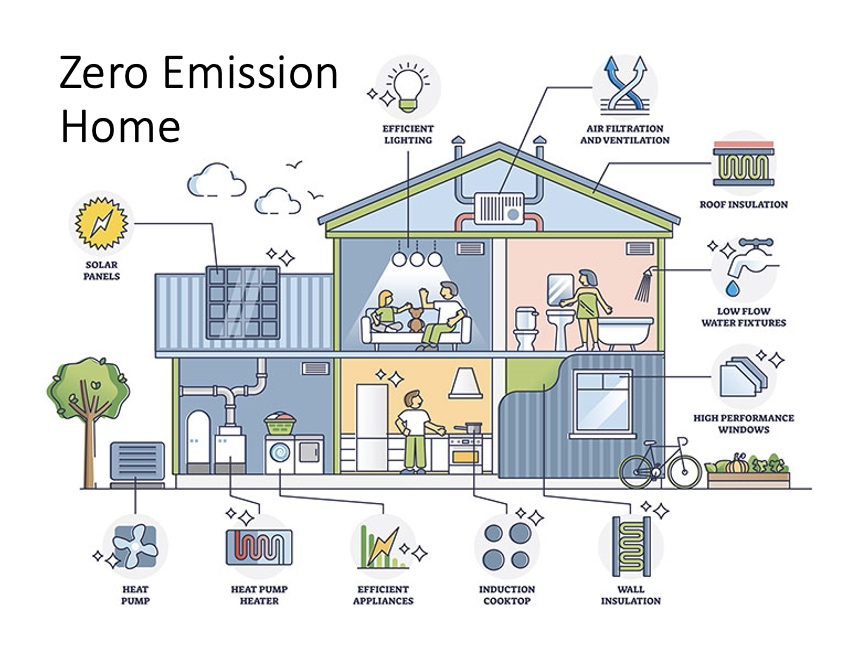
A zero emission home is one that doesn’t burn any fossil fuels (natural gas, propane, etc.) and only uses 100% renewable electricity, either produced on-site or received from the grid. They are typically all electric, have a tight envelope, are well insulated, energy efficient, and provide car charging as well. The following illustration shows common features. A “net zero” home actually produces as much energy as it uses during the course of a year.
Zero Emission Household
A zero emission household includes factors beyond the home, such as things that are consumed like food and goods/services. Most American’s total emissions come from four main areas (“the big four”): housing, transportation, food, and the consumption of goods/services. The emissions caused by what we eat and buy often involve many parties and steps (supply chain) and can be challenging to understand or measure. But we can certainly try our best to make sustainable and carbon-free choices. Some basic strategies are listed below.
Housing
Sources: Heating/cooling, hot water, electricity, gas, yard equipment, etc.
Strategies: Transition to using 100% renewable electricity and high-efficiency electric appliances for every household function
Transportation
Sources: Motor vehicle fuel, vehicle manufacturing/maintenance, air travel, other misc.
Strategies: Transition away from any transportation that burns fossil fuels, minimize air travel, walk/bike whenever possible.
Food
Sources: The growing, processing, production, transportation, storage and display of all the food we eat
Strategies: Choose foods grown/made locally when possible, minimize meat and dairy consumption (especially beef), minimize frozen, less processed, less packaging..
Goods/Services (stuff you buy)
Sources: Clothing, household goods, health care, entertainment, personal care, etc.
Strategies: Choose second hand and sustainably made products and services whenever possible. Avoid single use/disposable items.
 ZERO30CLUB.ORG